
The Decline of ‘Team Canada’: Faltering Resistance to U.S. Tariffs
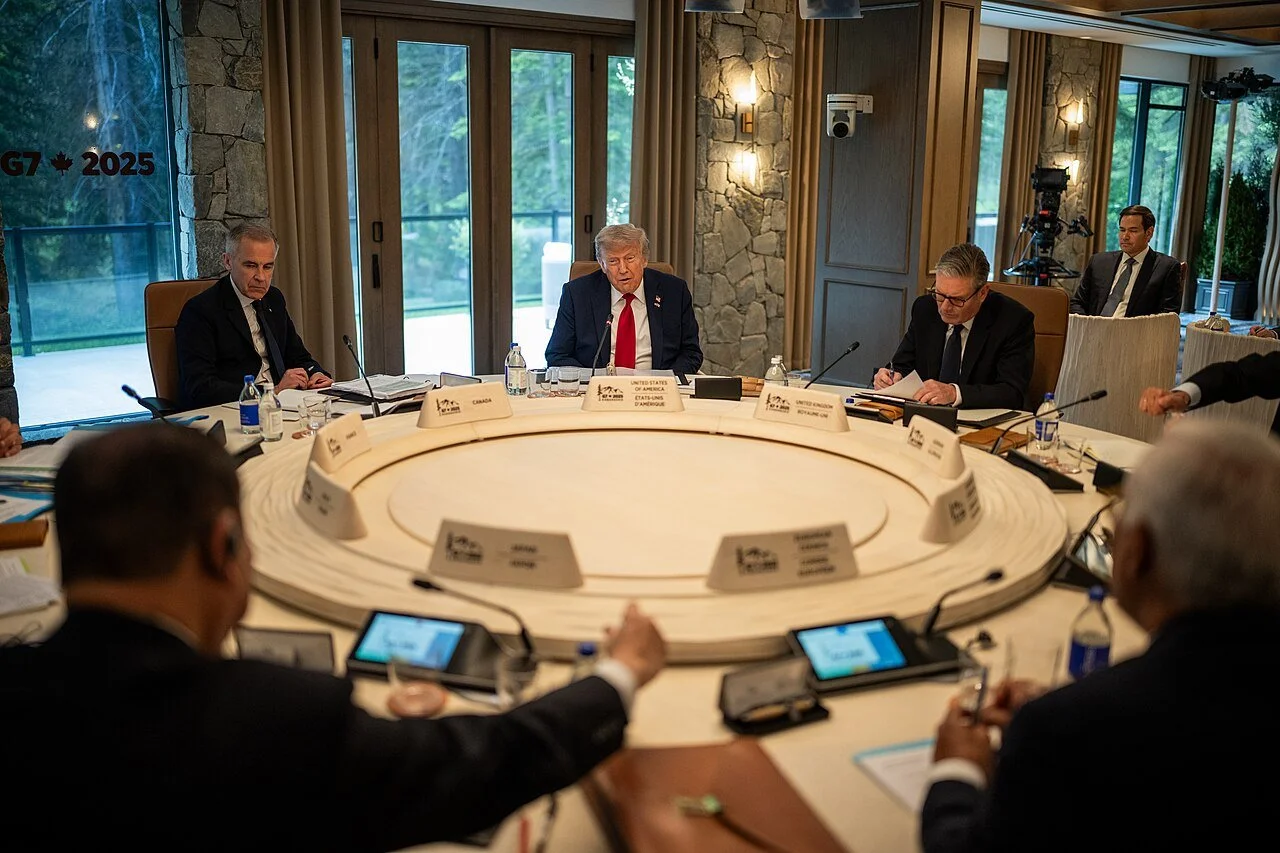
Nine months into a harsh tariff war with the United States, the Canadian economy remains reeling from significant losses. The trade war, imposed by Washington in February, has affected nearly all sectors of the Canadian economy, with a particularly blistering effect on steel and aluminum. Now, as the dispute drags on, Canada’s once-united front is splintering along familiar provincial lines.
Forming ‘Team Canada’
Even before Trump’s inauguration on January 20th, former Prime Minister Justin Trudeau assembled the nation’s premiers to discuss a unified Canadian strategy against imminent, sweeping American customs duties. During this meeting, the leaders of the 13 Canadian provinces and territories reached a near-unanimous consensus. With the notable exception of Alberta Premier Danielle Smith, all premiers signed a communique stating that Canadians will do all they can to prevent Trump’s imminent imposition of tariffs.
This united Canadian front, dubbed “Team Canada,” generated widespread optimism for the prospect of a unified provincial bloc. It also spurred pervasive patriotic (anti-American) sentiment among Canadian voters. The subsequent victory of the Liberal Party in the federal election demonstrated that patriotism. Party leader Mark Carney campaigned with the promise of resisting U.S. expansionism and diplomatic intimidation.
The promise proved convincing to Canadian voters, particularly after repeated comments about a 51st state and “Governor Trudeau” on behalf of the American president. Additionally, In a rare moment of bipartisanship, the opposition leader, Pierre Poilievre, called for unity among Canadians after his electoral defeat.
Even after the predicted imposition of tariffs under the International Emergency Economic Powers Act (IEEPA), Canadian politics seemed to have reached a nearly unprecedented level of political unity. Fast forward to late summer, and things are not looking so great.
Provincial Disagreements
First to speak out was Scott Moe of Saskatchewan. Citing rising costs for farm equipment, Moe renounced Ottawa’s retaliatory tariffs in a late-July press conference, warning of damage to Saskatchewan’s agricultural sector. In a hard pivot from the prior “Team Canada” consensus, Saskatchewan’s Premier claimed that the best route forward for Canadians was a low-tariff or no-tariff trade environment. Moe advocated for stronger ties to U.S. business and lawmakers, arguing that a stronger relationship with the White House would promote economic growth across Canada.
Opposition NDP leaders were quick to react, slamming Moe for failing to stand up against coercive American customs duties. NDP Leader Carla Beck retorted that “he’s been identified by Americans as being one of the weakest links, Alberta and Saskatchewan. And that’s what bullies look for.” Ontario Premier Doug Ford echoed Beck’s concerns with Moe’s complacent response to increased American tariffs. He pushed for Carney to ramp up retaliatory measures against the United States, refusing to back down in relation to Washington. “If you roll over, this guy [President Donald Trump] will just keep beating you and beating you; no, let’s start hitting back, hitting back hard,” said Ontario’s premier in a press conference in August.
Next to criticize Ottawa was British Columbia. Premier David Eby complained that B.C.’s softwood industry was not receiving enough attention from the federal government. The forest sector, Eby defended, merits similar job protection to the auto parts and steel sectors which are strongly shielded from U.S. tariff losses.
“The contributions of the forest sector to the Canadian economy are massive and provide a greater direct contribution to Canada’s GDP than auto parts and steel, and provide more direct employment across the country than either of those sectors,” Eby claimed. Quick to respond was former Alberta premier Jason Kenney, labeling Eby as a bigger threat to national unity than Donald Trump or Albertan separatists.
New Tariff Pressures from Abroad
China is now trying its hand at the tariff game. In March, China announced “anti-dumping” tariffs on Canola imports. Beyond their claim of unfair trading practices, these tariffs mark an apparent retaliation against Canadian tariffs on Chinese EVs imposed in October of 2024. Saskatchewan’s Scott Moe was again at odds with Ottawa’s tariff policies, claiming that Prime Minister Carney is willing to sacrifice Canadian farmers to protect the auto industry. British Columbia Premier Eby, on the other hand, argues that Canadian tariffs on China were simply a measure to appease the Biden administration and serve no purpose in today’s economy.
The Road Forward
Is it the responsibility of Prime Minister Mark Carney to act as a mediator between the provinces? What is the delicate equilibrium between accommodating divergent provincial demands and enforcing a nationwide plan for resilience? What is the most effective policy strategy to combat U.S. tyranny? These are the questions that Canadian lawmakers will be asking themselves in the coming months. One thing is clear: Canadians are showing weakness, and President Trump loves to pounce on the weary.
One potential solution involves levying an export tax or restriction on Canadian oil en route to Washington. Given that imported Canadian crude oil accounts for 20 percent of total U.S. oil consumption, an export tax would likely have crippling effects on American consumers. However, since the Alberta Natural Resources Act was passed in 1929, Alberta has fiercely defended its right to manage its abundant oil reserves. Since Alberta controls the vast majority of oil output, most of which is exported to the United States, its participation would be vital to the effectiveness of such a strategy. Premier Danielle Smith has made it very clear that Alberta is not willing to bail out larger provinces that she claims are more than capable of fending for themselves.
Another strategy involves recourse to international agreements. Provisions in the Canada-United States-Mexico Agreement (CUSMA), formerly the North American Free Trade Agreement (NAFTA), establish certain goods as duty-free. A majority of Canadian firms are eligible for CUSMA duty-free status and have successfully qualified for this provision. However, autos, steel, and aluminum imports are not protected under CUSMA and have been the target of more recent American customs duties.
Maybe retaliation is not the most effective strategy after all. Economists have pointed out that reactionary tariffs on US goods, even when diversified, are highly unlikely to deter Washington. Instead, Canada can focus its resources on minimizing economic fallout domestically and pursuing collective action with other affected nations (MERCOSUR, for example).
Here's the bottom line. To effectively pursue any reactionary strategies, Canada must prevent internal splintering. It is up to the provinces to set aside their individual interests for the greater good of the Canadian economy.