
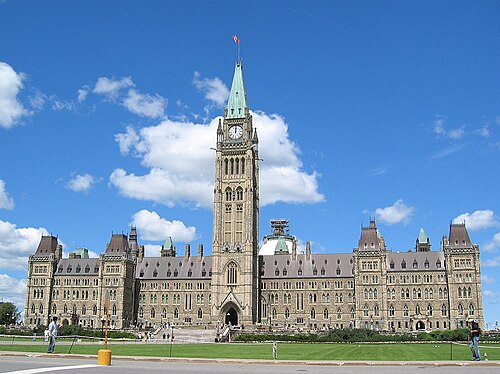
In a gamble for Canada’s foundational laws, can infrastructure policy really mend a fragmented nation? On September 21st, 2026, the federal government, through Steven MacKinnon, tabled the Building Canada Strong Act (Bill C-39) before its first reading in the House of Commons. The bill’s principal provisions, overseen by the newly created Major Projects Office (MPO), include fast-tracking approval and assessment processes for chosen infrastructure projects of ‘national interest’. Critics have warned that C-39’s attempt to create shortcuts for the private sector by deregulating permitting processes can undermine environmental, union, and indigenous rights. However dangerous, Mark Carney’s administration has framed it as essential to furthering economic growth.
Canada’s Liberal majority government has consistently emphasized the importance of sovereign development in the wake of the trade and tariff war with the United States. What is less talked about is Carney’s attempt to settle domestic separatism using what he calls “cooperative federalism”. In short, the Major Project’s Office’s ability to reassure each province that their contributions are valued in the national economy. On the surface, Bill C-39 may only seem to have economic objectives, but at the core it may also serve a political purpose: one that could bridge a divided Canada. Can the strategy work - regardless of the risks it imposes on citizens?
By the evening of October 19th, the Alberta referendum votes had come in, and a majority of the citizens in the province preferred to remain a part of Canada. Separatists’ main reasoning seemed to be that federal energy priorities did not align with their own. This was certainly true under J. Trudeau, where years of Liberal environmental policies created barriers for the western-centred oil industry. Carney needed symbolic action to demonstrate his commitment to Albertans preceding the referendum; then came Pacific Link. The Pacific Link pipeline was designated as the Building Canada Strong Act’s first official project of national interest on October 1st, 2026. The initiative would work to link Alberta’s bustling oil market to British Columbia's Pacific ports and give the province simple exporting access to Asian markets. In a statement by the Prime Minister’s Office, the project was marketed to “keep Albertan oil competitive for the long term” - attempting to settle separatists’ exact concerns.
Could a similar strategy settle the federal anxieties of Quebecers? After the separatist Parti Québécois took minority government on October 6th, Mark Carney conducted a private conversation with the new premier, Mr. Paul St-Pierre Plamondon. The topics included possible means to collaborate, and highlighted that there were “big projects like Churchill Falls”. In August, the federal government announced it would be providing $10 billion to the Churchill Falls expansion project - the largest clean energy investment in North American history. This would expand its production capacity to 14,000 megawatts of renewable power. Under Christine Fréchette’s former CAQ government, Hydro-Québec poured a massive $6.5 billion into the project as well. With the provincial government of Newfoundland and Labrador, the three parties reached an updated Memorandum of Understanding promising, upon conclusion of the binding agreements, that the project would fall under C-39’s Major Projects Office. This could see benefits to Quebec’s investment, de-risking the project and removing interprovincial red tape that often derails foreseen schedules.
This past election cycle, the PQ campaigned on auditing the necessity of the hydroelectric project, along with strongly opposing the MPO-referred Alto high-speed railway. Instead, the party promised to redirect money for the project into the province’s aging infrastructure. This could be a clear indication that the strategy isn’t effective enough to sway every declining federalist sentiment in Canada.
Shifting focus away from the provinces, several interest groups have been incredibly vocal in their worries. The Canadian Labour Congress, among other union representatives, came together to oppose the bill. They felt some clauses featured in C-39 encourage employers to hold out for federal intervention during collective agreement settlements. Candace Rennick, the National Secretary-Treasurer of the Canadian Union of Public Employees, affirmed in a statement that it would create an uneven bargaining field and restrict Canadian employees’ right to strike - creating tensions between labourers and the federal government.
Similarly, First Nations groups remain worried Bill C-39 threatens to minimize the decades of legal battles to include indigenous consultations as an essential quality of infrastructure projects. The Building Canada Strong Act would allow contractors to commence early work on projects before First Nations impact assessments have been approved. If cooperative federalism is meant to strengthen national cohesion, alienating indigenous governments clearly undermines that objective.
Moreover, harsh criticisms from MPs and environmental advocacy organizations alike pick at the bill’s goal of “One project, one decision, one year”. The Centre québécois du droit de l’environnement (CQDE) opposes C-39, believing it would be unrealistic to conduct the proper seasonal impact assessments for large-scale projects on such a rigid timeline. Some of the policy’s clauses shift the auditing of energy infrastructure away from the Impact Assessment Agency (IAA), and in turn, force regulators to become project inspectors. This centralizes project power and adds to concerns of weakened public hearings and public engagement during the assessment process. If citizens lose confidence in environmental oversight, the federal government could end up trading project speed for a weakened unity that C-39 seemingly fosters.
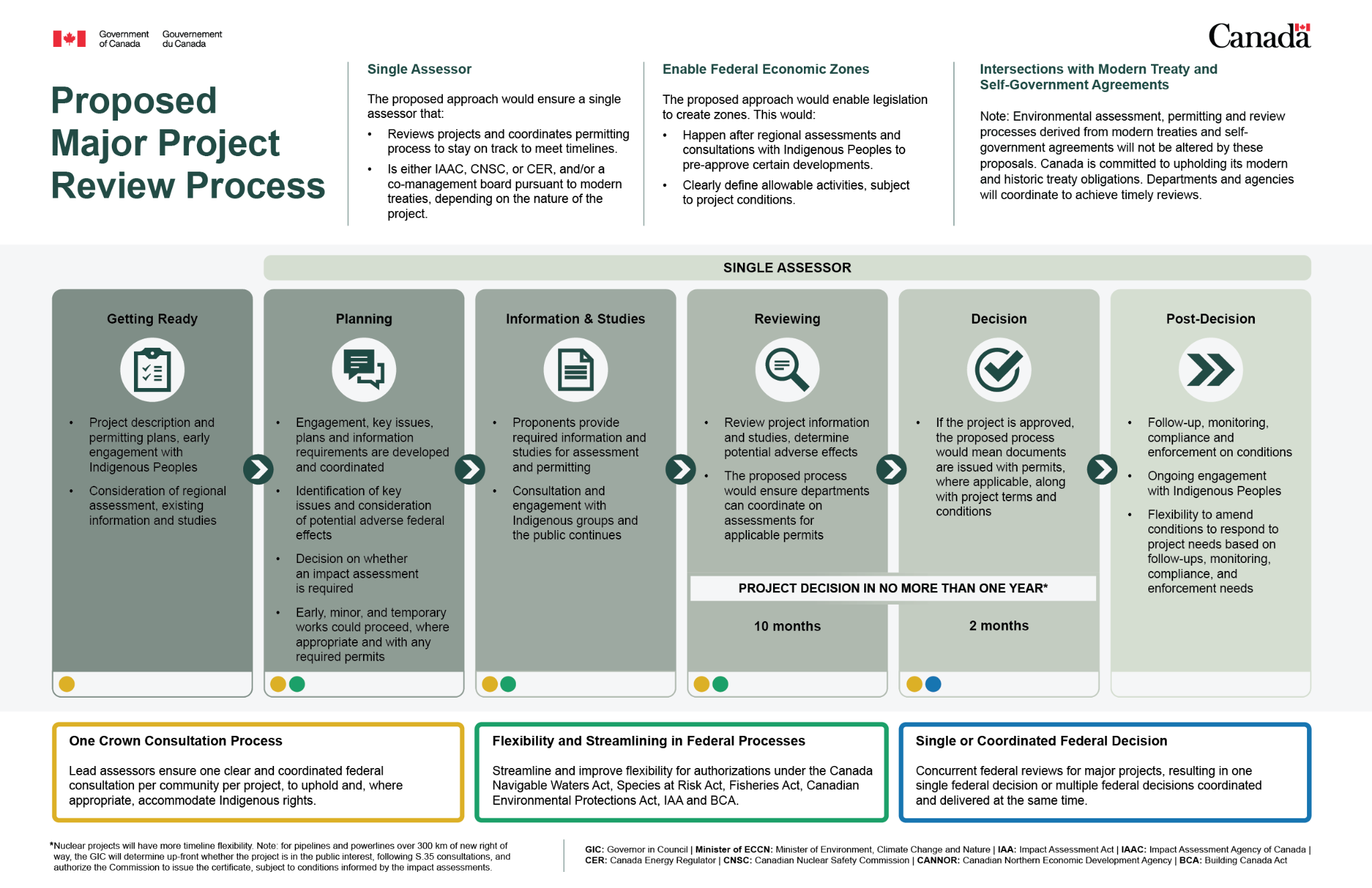

In early September, the Government of Canada put together a report on Proposals for Getting Major Projects Built in Canada. Here, common themes and concerns are summarized from a compilation of 26,000 submissions by indigenous, industry, NGO, and academic parties. Although the paper was put together before C-39’s tabling, its problems still linger, leaving many stakeholders to speculate that while C-39 may perhaps improve relations with some provinces through project development, it creates many micro-divisions elsewhere.
This raises the question: is it worth adopting Bill C-39 because of its plan for cooperative federalism? No. The law’s amendments put too many preexisting rights at risk to justify a solely symbolic gesture. However, it is important to remind ourselves that Carney’s administration is likely running this strategy adjacent to the bill’s primary purpose. A purpose to promote positive opportunities for private sector stakeholders and Canada’s long-term economic stability.
Edited by Jai Shah