
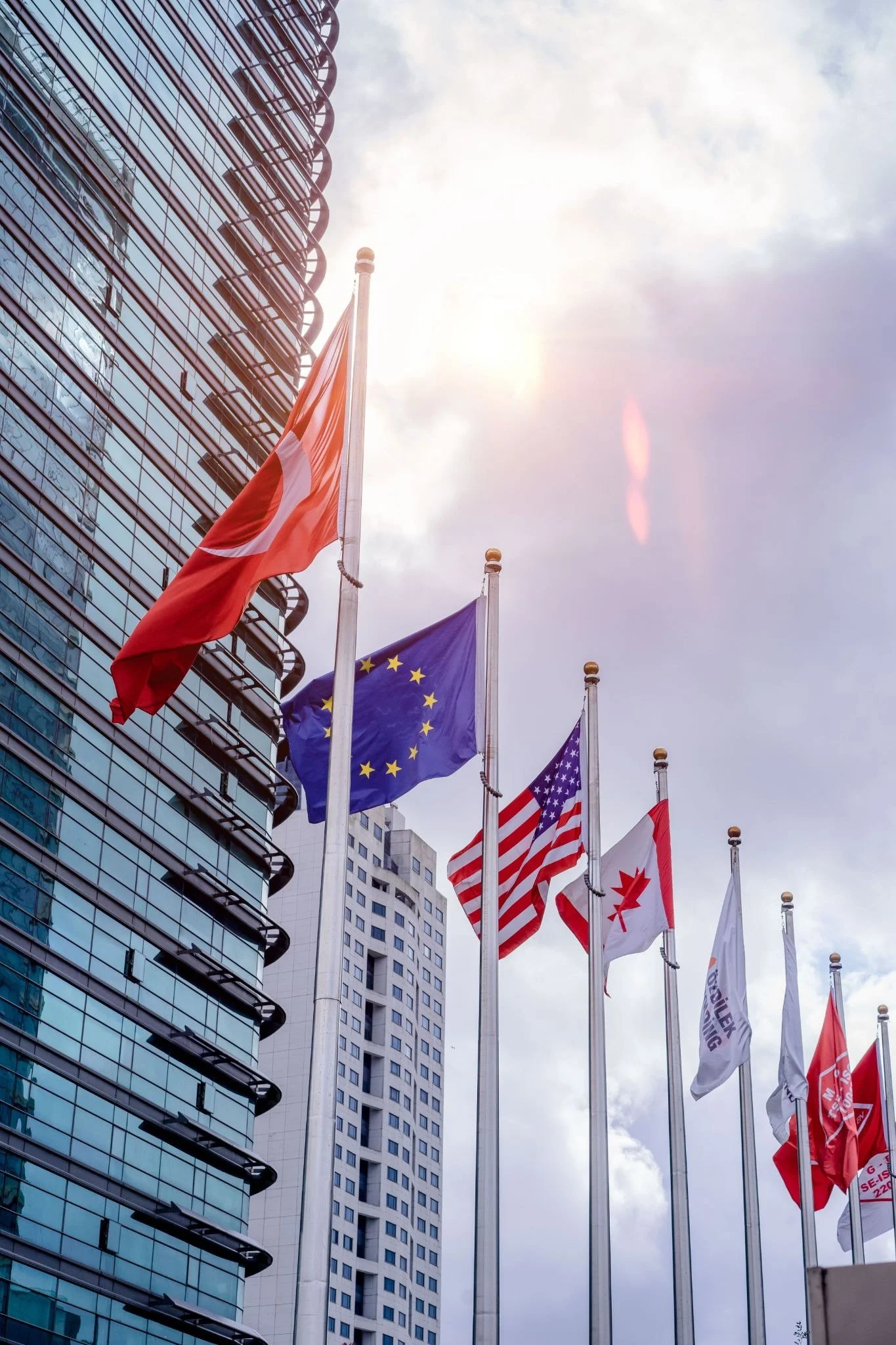
On 17 September 2026, Canadian Prime Minister Mark Carney addressed the European Parliament and proposed a new partnership between the EU and Canada. Although Canada cannot become an EU member state, European Commission President Ursula von der Leyen has suggested developing a new type of “associate membership” for Canada. In Carney’s speech, he outlined Canada and Europe’s long-standing cultural and geographic ties, which a new partnership could expand. This marks another step in the process of increasing European-Canadian relations as a response to increasingly fragmented relationships with the USA. Earlier in the year, Carney began this process with a special address at the World Economic Forum’s annual meeting in Davos, where he argued that the world order had radically shifted after President Trump began discussing America’s possible annexation of Greenland. However, whether the proposal for Canadian associate membership of the EU will contribute to a broader transformation in international relations depends on the nature of associate membership and whether the EU expands the use of such relationships to other nations.
In his address to the European Parliament, Carney suggested opportunities for strengthening both freedom of trade and movement between the EU and Canada. Notably, he proposed Canada joining Erasmus+, a programme focused on promoting international mobility in higher education. All EU member states are members of the programme, as well as seven non-EU European countries. Canada joining Erasmus+ would not on its own indicate a change in EU foreign policy, given the current inclusion of non-EU countries in the scheme. However, by incorporating a state from outside the European continent, it does suggest a shift to organising the EU on an ideological basis rather than geographical proximity alone.
On trade, Carney discussed exploring options for integrated financial markets between the EU and Canada. This is unsurprising, as the European Economic Area (EEA) is the world’s second-largest economy, with an estimated GDP of 16.4 trillion euros; however, an integrated market between Canada and the EEA would require a complex transformation. The EEA currently comprises all 27 EU member states and the three EFTA states of Norway, Liechtenstein, and Iceland, which all agree to follow the same rules and regulations to create a free single market. Currently, Canada has no mechanism to join the single market because it is not an EU or EFTA member state. However, Swiss-EU relations offer a model of close economic relations that does not include direct participation in the EEA. Although Switzerland is an EFTA member, it has chosen not to join the EEA; instead, it implements bilateral trade agreements that allow free movement of goods and services between Switzerland and the surrounding EU. Although the geographic separation between Canada and the EU could make fully incorporating such a model of economic relations problematic, it still provides a possible framework for increased economic integration. The EU-Canada Comprehensive Economic and Trade Agreement (CETA) could be expanded to create a trade relationship similar to EU-Swiss relations. CETA was set up in 2017; however, nine EU member states have yet to ratify the agreement. This agreement aims to increase trade between the EU and Canada by reducing barriers such as customs duties and other export costs and allowing EU companies to bid for public contracts in Canada. If the remaining 9 member states ratified CETA and the coverage expanded, it could form the economic basis of Canada’s associate membership.
One major problem with Canada’s plan to expand trade relations with the EU is the USA. Two-thirds of Canadian exports go to the USA, making it a critical trade partner. The high level of trade between the two countries has embedded Canada deeply in the North American market. If Canada partners more closely with the EU, its trade with the USA may be destabilised, as product and data regulations would have to align with strict EU rules, unlike those currently in North America. US international relations with both Canada and the EU may also be affected by potential retaliation in response to growing EU-Canadian trade. Donald Trump responded to initial discussions of Canadian associate membership by threatening to implement harsh tariffs on the EU, and he continues to impose a variety of tariffs on Canada. The threat of US retaliation could push Canadian EU integration further as they try to build a strong coalition amid volatile US international relations. However, the risk of US trade disruption may push the EU and Canada to reconsider their approach, as the US continues to have the ability to pressure the EU.
This model of Canadian associate membership could significantly affect the EU’s approach to international relations. Canadian associate membership offers a lower-stakes, less absolute form of membership that the EU can use in several ways. Potentially, the EU could offer associate membership to countries such as Albania, North Macedonia, and Montenegro, with which it has engaged closely, providing financial support aimed at political and economic improvement. Associate membership could allow the EU to further support its ideals in these states, with lower financial risk because they are excluded from the single market (EEA). Although this could lower economic risk for member states, countries that heavily finance the EU (such as France and Germany) could see this as an opportunity for states to pursue relations with the EU without carrying the same financial burden while reaping similar benefits. If the EU offers associate membership to other countries in Europe, this could increase Euroscepticism, as alternatives to full membership become available and reduce the importance of EU membership. However, if the EU begins to offer associate membership to other non-European states, it could increase outward focus on international rather than internal relations.
Canadian associate EU membership may affect EU international relations both economically and politically. Still, the extent of that change depends on the degree of financial and political integration Canada pursues with the EU, the response of international actors, and the use of associate membership for both European and non-European states. It remains unclear what Canadian associate membership will achieve in practice. Whether or not it brings about the new world order Carney envisions will only become evident over time.
Edited by Noora Kaisi