
On Sept. 12, Anthropic CEO Dario Amodei published a letter calling for substantial regulation on artificial intelligence development. He argued that, despite AI’s incredible potential for good, continued development without proper global regulation would be disastrous for humanity. Other tech magnates, including OpenAI CEO Sam Altman and Tesla CEO Elon Musk, soon seconded the message. Those most financially incentivized toward liberal accelerationism instead proposed the opposite, a stark reflection of AI’s danger left unchecked. With global superpowers holding differing views on this regulation debate, the United Nations General Assembly’s high-level week in late September provided a stage for discussion. Representatives from major AI companies, NGOs, legal scholars, coalition groups, and other entities voiced their opinions, but the most significant divide was between coalitions led by the United States and China.
Chinese Plan
China formally began its initiative in July, at the World Artificial Intelligence Conference (WAIC) held in Shanghai. Representatives from more than 100 countries attended, with 29 signing and becoming founding members of the World Artificial Intelligence Cooperation Organization (WAICO). These 29 included major geopolitical powers such as Russia, Brazil, South Africa, Indonesia, and Malaysia, alongside developing nations including Venezuela, Myanmar, and Cameroon. This fusion of regionally dominant and dependent states was intentional; Chinese President Xi Jinping outlined WAICO’s mission with stated goals of international collaboration and multilateralism. Aiming to “prevent creating new historical injustice in AI,” China’s plan holds that developing nations must have a substantive say in the development and regulation of these technologies. China argues that otherwise, factors such as microchip purchasing power will further the wealth divide between states globally. Tangibly, WAICO strives for systematic capacity empowerment for developing nations. This includes, but is not limited to, promises of 5,000 AI training opportunities, regional AI application and cooperation centres, and shared use of China’s meteorological safety system. Analysts at the Center for Strategic and International Studies suggest China’s plan may not be purely benevolent, as it follows a pattern of soft power grabs by the ascending superpower. By recruiting middle-power nations, the Chinese government takes direct steps to reform the dominant institutions in the Asia-Pacific region toward Chinese principles. This includes programs such as the Global Development Initiative, Global Civilization Initiative, and Global Security Initiative. Some suggest that through WAICO, China follows this precedent, aiming to instill its values during AI’s early days.
U.S. Plan
At its second Pax Silica Summit in June, the U.S. presented a fundamentally different approach centred on Western efficiency. Attended and signed by 24 countries and various tech moguls, this project focused on expanding AI access for the U.S. and its allies. Echoing the Trump administration’s anti-globalist sentiment, the U.S. proposed a strategy of cooperative accelerationism with its allies and partners, including the European Union, Japan, Israel, and the United Arab Emirates, among others. Instead of slowing progress in the name of global safety, the U.S. proposed increased collaboration and resource sharing with conference attendees to diminish reliance on adversaries. In contrast to the Chinese proposal, the U.S. aims to further accelerate so as not to fall behind rivals. Pax Silica signatories aim to win the global AI race, ensuring domestic security and prosperity.
United Nations
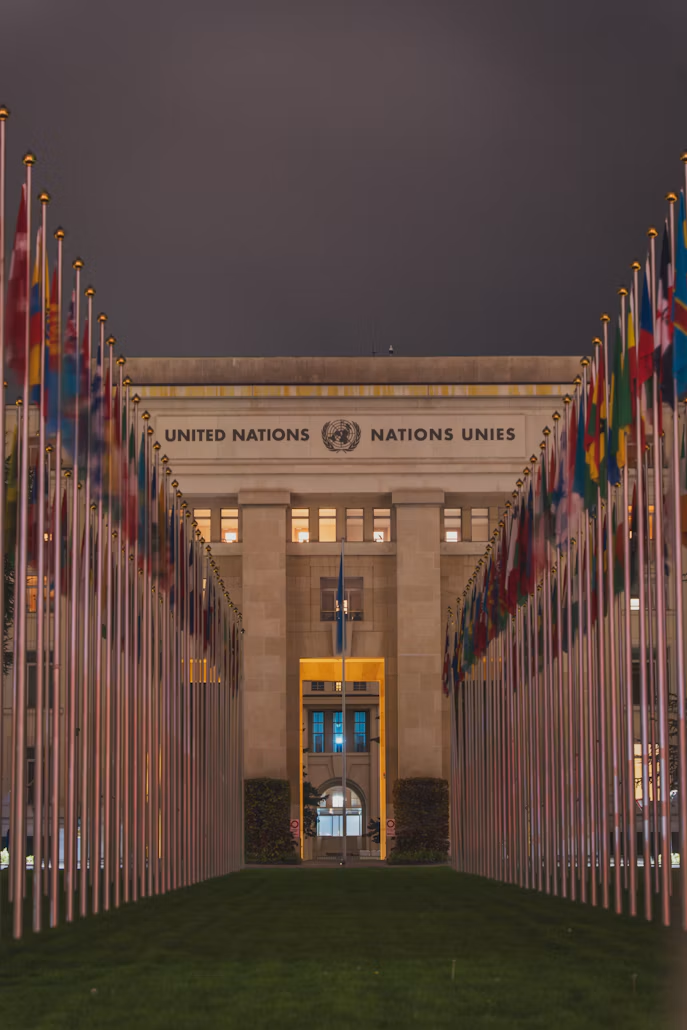
At the UN General Assembly Security Council meeting, Michael Kratsios, director of the White House Office of Science and Technology Policy, framed fears surrounding artificial intelligence as a globalist scheme to suppress innovation. According to Kratsios, the U.S. supports diplomacy but prioritizes its national sovereignty. Fu Cong, China’s representative, reiterated its mission of global compliance and development predicated on safety guidelines. The same fracture came up again as President Donald Trump addressed the UN at large: “We’re leading now over China by a lot and everyone else, and we’re going to keep it that way. We’re going to keep it very, very straight and very strong. I’m not going to stifle growth of anything that’s going to be bigger than the Industrial Revolution.” Conversation remained civil at this UN conference, but with members of Trump’s administration taking more of an antagonistic approach and suggesting Chinese jealousy, these conflicting blueprints will likely directly clash in the near future.
Cold War Echoes and Path Dependency
The UN Conference revives Cold War tensions, with direct parallels to the Yalta Conference. Competition for global technological dominance, exploitation of developing nations, and looming questions of AI as an existential risk, much as nuclear weapons did decades ago, underlie proceedings. Modern political scientists tend to view Cold War escalation as one of the clearest examples of the analytical framework of path dependency. This interpretation holds that early decisions disproportionately affect later outcomes, as actors have a harder time pivoting strategies due to the sunk cost, habit, or network size. To be sure, one should caution against overextending this connection; factors such as national economic supply chains and fragmented alliances differentiate conditions. Nonetheless, major similarities are clear, and path dependency suggests the gravity of decisions the international community takes at this critical juncture.
Edited by Eavan Kallis