
Quantifying Costs and Benefits: Deregulation and Environmental Policy
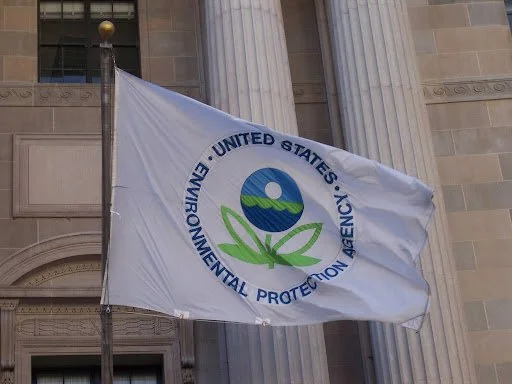
In early January of this year, the Environmental Protection Agency (EPA) announced, in a revision of emissions standards for turbines, that it would no longer be quantifying the human health benefits of reductions in air pollutant levels. The agency specified that the monetized values of health benefits resulting from reductions in fine particulate matter and ozone levels will no longer be considered in their analyses of environmental policy. While the EPA will still be quantifying overall reductions in emissions, it will no longer be quantifying the health benefits of those reductions.
In this revision, the EPA outlined why they are changing its method of policy evaluation, acknowledging that “historically, the EPA estimated the monetized benefits of avoided PM2.5 [particulate matter],” but that because of the uncertainty associated with estimating the monetary value of impacts to public health, the agency has “provided the public with a false sense of precision and confidence.” The report mentions many of the methods used to mitigate this, such as sensitivity analysis, where a range of benefits and costs are given that reflects the uncertainty of monetary estimates. However, because of the impact of environmental policy on the economy, the EPA must be confident in its estimates.
Monetizing the benefits of lower emissions is done through assigning a dollar value to outcomes such as lower rates of respiratory illnesses, hospitalization, and mortality to show the economic savings associated with certain environmental regulations. In a 2011 analysis of the Clean Air Act, the EPA found the estimated health benefits from decreased particulate matter and ozone morbidity to be around $130 billion. This is the major function of benefit-cost analyses (BCAs), which compare the potential financial benefits and costs of policy changes. These BCAs have been required from federal agencies since the early 1980s after an executive order from Ronald Reagan prohibited any regulatory action where the potential costs outweigh the benefits. Federal guidelines for regulatory analysis require monetized BCAs to be taken into account, stating that dollar values provide a “common measure” for evaluation and that without quantification, estimated net benefits are incomplete and may be misleading.
This change in analysis is a part of the Trump administration’s larger agenda of deregulation, including a push towards reconsidering and rolling back many Biden-era regulations. Soon after taking office, Trump issued a series of executive orders aimed at restricting future regulation and modifying or repealing “anti-competitive regulations.” The administration is currently in the process of reconsidering a safety rule for coal miners passed under the Biden administration that would lower the permissible exposure levels to silica dust, a carcinogen that causes black lung. This has stalled the implementation of the lower exposure levels, which have been recommended since 1974, and comes at a time when levels of black lung are on the rise due to changes in mining practices.
In addition to the policy rollbacks, a major move made by the Trump administration was the EPA’s proposal to rescind the 2009 Endangerment Finding. This finding, published by the EPA under the Obama administration, identified six greenhouse gases as threats to public health and welfare. Upheld by federal courts, the endangerment finding gives the EPA authority to regulate these greenhouse gases and has provided much of the legal foundation for federal emissions regulations. If the proposal were successful, it could repeal all of the emissions regulations for engines and motor vehicles that resulted from the endangerment finding.
Like the changes to the benefit-cost analysis framework, part of the reasoning behind the reconsideration of the endangerment finding is the “uncertainty” of estimates of public health and welfare, especially when quantifying the economic benefits of regulation. The outcome of this change is not just removing uncertainty, but also removing the value of health benefits from policy analysis, such as lower mortality rates and hospitalizations. Most environmental regulations are justified on the basis of protecting human health, an analysis that does not reflect this is incomplete and undermines the purpose of these regulations. This leads to policies that do not properly consider the public welfare, placing human health in a much more vulnerable position.
Edited by Kathleen Donnelly.