
State Sanctioned Violence Against Afghan Women
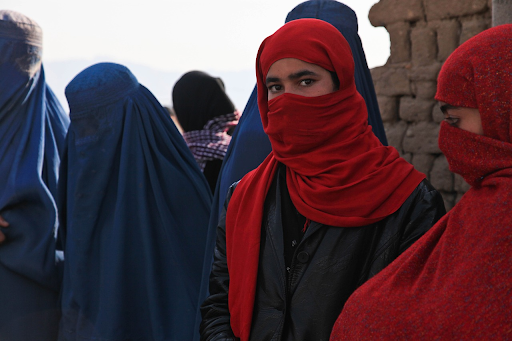
On January 7, 2026, the Taliban’s emir issued a two-point decree endorsing a new Criminal Procedural Regulations for Courts (119 articles, 3 chapters, 10 sections) and announcing it would take effect immediately on signing. This regulation was not publicly announced, debated, or widely articulated by the authorities, and its existence only came to light after Rawadari, an Afghan-led human rights organization, issued a statement and published a copy of the regulation in its original Pashtu language on their website on January 21, 2026. The regulation became publicly known just two days before the UN Under-Secretary-General for Political Peacebuilding Affairs, Rosemary DiCarlo, visited Kabul. In Kabul, she held in-person meetings with the de facto Taliban ministers as part of ongoing engagement under the UN-led Doha Process. DiCarlo also held a less than one-hour virtual meeting with a few Afghan women from civil society, and beyond raising concerns about the Taliban’s ban on girls’ education and restrictions on women’s employment, DiCarlo made no public reference to the new regulation.
This bare minimum acknowledgement of life-threatening issues is only a glimpse into the kind of treatment that Afghan women have been facing since the Taliban’s takeover in 2021. Women have been denied healthcare: they have been turned away by clinics simply because they are women, and they cannot be treated by male doctors (and there are fewer female health workers (2). In December 2024, the DFA issued a ban blocking women from studying medicine or midwifery, closing one of the last pathways for them to become healthcare providers. In addition to being denied healthcare, girls are no longer allowed to go to secondary school. This crisis began earlier than the September 2021 ban—nearly 30 per cent of Afghan girls never start primary school due to poverty, restrictive gender norms, and safety concerns. The impacts of this are devastating. 78 per cent of young Afghan women are not in education, employment or training, early childbearing is projected to rise by 45 per cent in early 2026, maternal mortality could increase by more than 50 per cent, and denying girls a secondary education is costing Afghanistan 2.5 per cent of its GDP every year.
Moreover, Afghanistan now has one of the largest workforce gender gaps in the world, where just one in four women are working or seeking work, compared to nearly 90 per cent of men. This is due to the Taliban’s sweeping bans, which bar women from working in sectors that once offered employment opportunities, such as the civil service, national and international NGOs, and beauty salons. Now, most women who do work are forced into low-paying, unstable jobs in the informal economy, and even accessing money is a challenge: less than 7 per cent of women have a bank account or use a mobile money service. Women’s civil society organizations have also come under intense pressure since the Taliban banned women NGO workers and removed women from leadership roles. Women are also completely excluded from politics: in 2020, Afghan women held over 25 per cent of seats in Parliament and could run for president, whereas today they hold no positions in the de facto cabinet. There are no images of women in public office, on television, or at official events. It simply is no longer safe to be a woman in Afghanistan. Along with the denial of education, healthcare, employment, and political rights, violence against women has likely risen. While it is no longer possible to safely or reliably collect nationwide data on gender-based violence in Afghanistan, conclusions can be drawn from the available figures. In 2018, more than one in three Afghan women had experienced physical and/or sexual violence from an intimate partner within the past year. In 2023, nearly 30 per cent of Afghan girls under 18 were married, including 10 per cent under the age of 15, and these rates continue to rise.
Now, with the Taliban’s new regulation, this way of life becomes even more solidified for Afghan women. Violence against women is not only legalized but encouraged, treating women as property with no legal agency of their own. Article 32 states the following: “If a husband strikes his wife with excessive beating resulting in fracture, injury, or the appearance of bruising on her body, and the wife proves her claim before the judge, the husband is deemed a criminal; the judge shall sentence him to fifteen days of imprisonment.” The penalty for endangerment of animal welfare carries a harsher penalty: Article 70, “A person who causes animals—such as dogs, camels, sheep, and similar animals—or birds such as chickens, quail, or partridge to fight is deemed a criminal; the judge shall sentence him to five months of imprisonment.” This implies that women’s bodily integrity is worth less than that of an animal. Article 34 criminalizes women who leave their marital home without their husband’s permission: “If a wife, without the permission of her husband and without a lawful justification, repeatedly goes to her father’s house or the house of other relatives and stays there, and despite the husband’s request and a judicial decision, the father or other relatives refuse to return the wife to the husband, both the wife and those who obstruct are deemed criminals; the judge shall sentence both to three months of imprisonment.” The tolerance of violence is not the only thing this regulation imposes on women.
The regulation also institutionalizes an authoritarian system of control, which codifies an ideological system, where punishment, surveillance and coercion are core instruments of governance. Article 4(5) states that “the enforcement of ḥadd (fixed punishments prescribed under Sharia) punishments pertains to the Imam, but tazeer (discretionary punishments determined by an authority) punishments may also be carried out by the husband and the master.” This use of “master” language goes against the Cairo Declaration’s categorical prohibition on enslavement, exploitation, and humiliation. The use of this language also implies that women are slaves to the men in their own households, households of which they are the backbone.
As of February 12, the United Nations Security Council extended for 12 months the mandate of the team tasked with monitoring sanctions against the Taliban and its associated groups and individuals. They have also decided that all States will continue to implement the sanctions measures laid out in Resolution 2255 (2015), which are imposed both on the Taliban and related “individuals, groups, undertakings, and entities” that threaten Afghanistan’s peace, stability, and security. The UN also further renewed the mandate of the monitoring team charged with assisting the Afghanistan Sanctions Committee for a period of 12 months from the date of its expiration this month. While these actions are a symbol of condemnation on behalf of the UN, it is not enough, and international stakeholders must intervene. These stakeholders can invest in civil society and women-led organizations providing services to women, children, and other vulnerable populations in Afghanistan. They are also encouraged to publicly affirm that legal frameworks institutionalizing discrimination and private violence will not be treated as legitimate governance and will trigger consequences. Stakeholders can also coordinate Magnitsky-style asset freezes and travel bans against Taliban officials responsible for drafting, endorsing, and enforcing this law. Furthermore, they should support all available legal avenues, including the ICC, the ICJ, and the exercise of universal jurisdiction, to hold the Taliban leadership and de facto authorities accountable for serious violations of international law.
The enforcement of this legislation marks a notable moment in the war Afghanistan wages against its women. This time, violence against women is not just a social expectation: it is state-sanctioned, making it even harder for international stakeholders to fight. Regardless of the difficulty of the fight ahead, the world must not forget these women, because to forget them would be the ultimate betrayal. The women of Afghanistan deserve to be listened to, seen, and given hope, because no woman is free until all women are free. Protect Afghan women.
Edited by Kathleen Donnelly.